This is Part 2 of a 5-part series on the critical factors that startups need to win.
Part 1: Why You Should Listen to Me
The Two Traits You Can't Win Without
Good timing helps. Strong networks help. A compelling market helps. But those are advantages, not requirements.
There are exactly two traits your company must have: speed and persistence.
These aren't the only things that matter. But without both, you don't get to play long enough to find out if anything else works.
They pull in opposite directions. Speed says move fast, iterate, spend to grow. Persistence says survive, conserve, extend runway. Most founders optimize for one and ignore the other.
Speed: Momentum is Your Fuel
Startups don't fail because they run out of ideas. They fail because they run out of momentum.
Momentum keeps your team energized, makes investors return emails, convinces customers to bet on you over the incumbent. It comes from shipping fast.
At Parse.ly (my last co), we were competing against established analytics players with much bigger teams and tons of resources. We couldn't out-spend them. We couldn't out-market them. But we could out-ship them and we could out-sell them.
We released features relentlessly, and we're maniacal about listening to customer feedback to hone our pitch and product strategy. Not because of some agile methodology. That cadence created a flywheel. Customers stayed engaged. The team stayed motivated. Prospects kept hearing about us.
Your biggest risk early on isn't doing something imperfect. It's doing nothing at all.
Decision velocity matters more than decision quality when you're finding product-market fit. You can't A/B test your way there. We made tons of wrong product decisions. But we made them fast enough to course-correct before they killed us.
Get something in front of users in weeks, not quarters. Real feedback beats theoretical planning. Be ruthless with scope. Ship the 80% solution now. You can iterate to 100% once you know it's the right thing.
Persistence: You Have to Survive Long Enough to Win
Speed gets you momentum. Persistence keeps you alive long enough to use it.
Most startup advice glorifies the fast burn. Grow at all costs. Blitz-scale. That works if you time the market perfectly and nothing goes wrong.
Things always go wrong. The market shifts. A competitor raises $50 million. Your best engineer quits. If your strategy depends on everything going right, you're buying a lottery ticket.
Persistence is building a company that can absorb punches and keep moving.
We started Parse.ly as a recommendation engine. That didn't work. We pivoted to analytics. That worked. If we'd burned through capital on the first idea, we wouldn't have had the chance to find the second one. Persistence isn't stubbornness. It's having the runway to figure out what works.
I wrote about this back in 2018 after one of our near-death experiences. We had a lead investor pull their term sheet the day before we were supposed to close our seed round. We were ready to give up. But we had one more investor meeting scheduled. We almost cancelled it. We didn't. That investor wrote us a check on the spot, and within four weeks we closed an oversubscribed round. The full story is here.
Luck is a huge factor in startup success. But you can't capture luck if you're not around to grab it. Persistence is what keeps you in the game long enough for luck to find you. Intelligence is commoditized in this industry. Persistence is rare.
I've seen founders who are incredibly good at not dying. They cut costs, extend runway, keep the lights on. But they're not building anything. Persistence without momentum is stagnation. The goal isn't to survive as long as possible. It's to survive long enough to win.
Managing the Tension
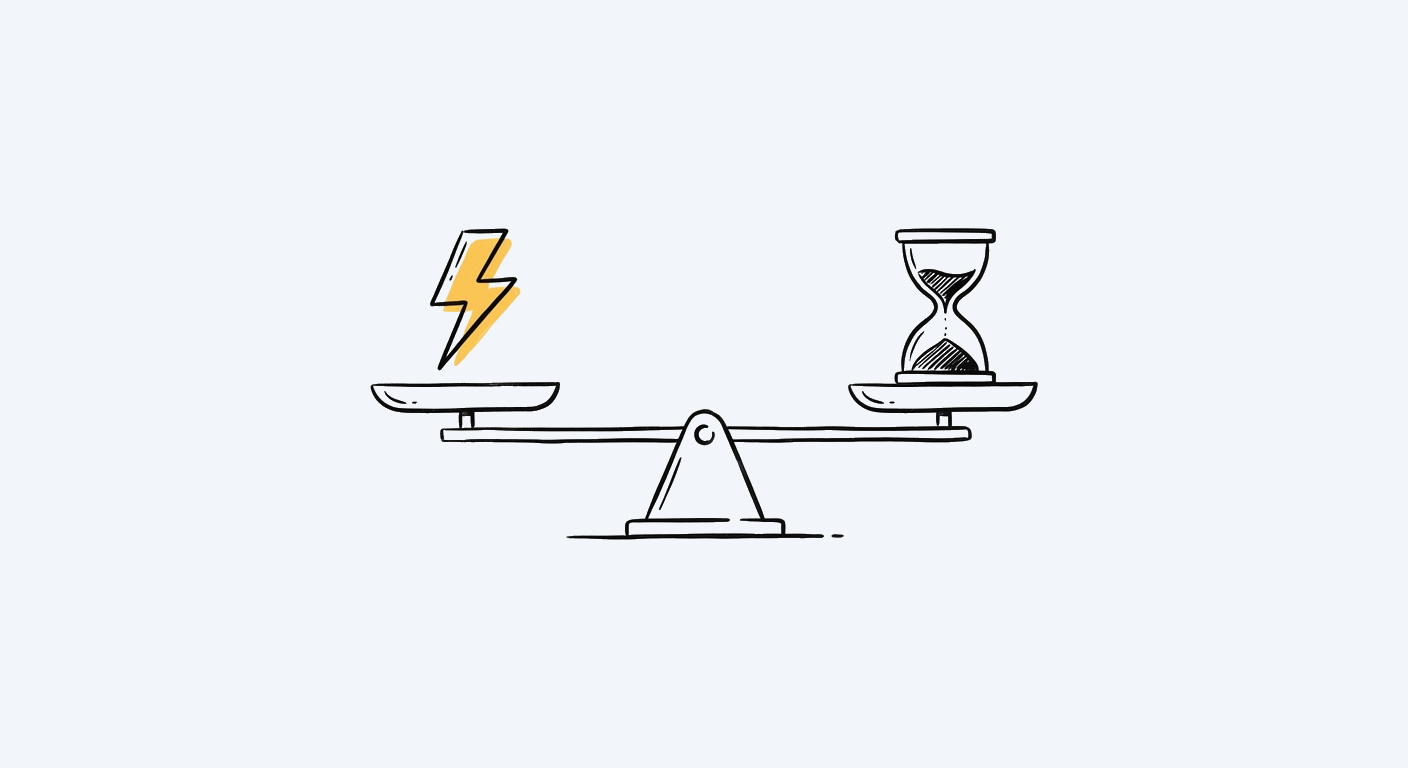
You can't maximize both speed and persistence. If you try, you'll either burn out or fade away.
The answer is understanding when to lean into each.
Early in a market, speed wins. This is where we are with elvex. AI agents are happening now. We can't afford to be slow. When you have momentum and something is working, double down fast. Pour fuel on the fire. When most decisions are reversible and the cost of being wrong is low, move fast.
But when the market is uncertain and you're not sure what's going to work, conserve resources. At Parse.ly, we spent years testing different customer segments. That only worked because we had runway. Not every quarter is a growth quarter. Sometimes you need to consolidate, fix technical debt, strengthen the foundation. Some decisions are hard to reverse. Hiring the wrong executive. Signing a bad partnership. Overcommitting to a technology stack. Slow down on the big bets.
We were fast where it mattered and persistent everywhere else. We shipped product fast and closed deals fast. But we were deliberate with capital and conservative with hiring. We didn't chase every shiny opportunity.
That gave us speed in the market and persistence in the business.
You Need Both
Speed without persistence is a sprint that ends in a crash. Persistence without speed is a slow march to irrelevance.
Most founders optimize for one and ignore the other. They move fast and run out of money. Or they conserve resources and lose momentum.
The companies that last figure out how to be fast and persistent at the same time. Ship quickly but spend carefully. Take risks but manage runway. Move with urgency but think long-term.
Next up in Part 3: What Foundations Create Founder Success.
This is Part 2 of a 5-part series on building startups that last. Read Part 1 here.Building Startups that Last (Part 2 of 5): The Two NECESSARY Company Traits to Win